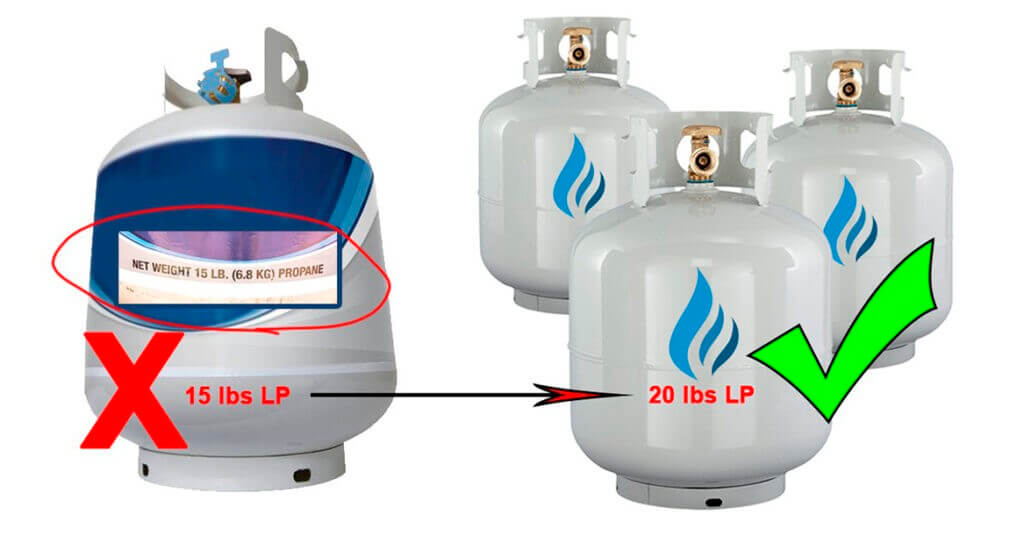
Propane tank exchange and refill are both legitimate ways to keep a gas grill supplied. The better choice depends on how much propane you receive, the posted price, the condition and eligibility of your cylinder, travel and wait time, and whether convenience or maximum fill value matters most that day.
Quick answer: read the net weight, then compare total value
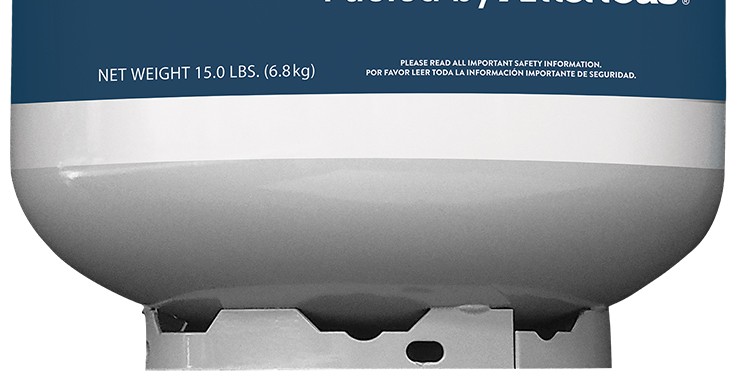
The familiar “20 lb” description is the cylinder’s nominal propane capacity—not a promise that every exchange contains 20 pounds of propane. Read the exchange cage or cylinder label for the product’s stated net weight. At a refill station, ask whether propane is sold by measured amount or as a flat fill and what the final price includes. Exchange is often fastest and can replace an unattractive or ineligible cylinder; refill often lets an eligible cylinder keep more of its remaining propane and may provide a larger fill.
Start here
Propane tank exchange vs. refill at a glance
| Factor | Tank exchange | Tank refill |
|---|---|---|
| Speed and hours | Often quick; many retail cages have extended availability | Depends on trained staff, filling hours, line, and station operation |
| Amount of propane | Stated net weight is set by the exchange product label | Eligible cylinders may be filled by measured amount within legal/safe limits |
| Propane already in your tank | Remaining product generally leaves with the surrendered cylinder | Remaining product stays; you pay for propane added under the station’s method |
| Cylinder condition | Can be convenient when an accepted cylinder is rusty, unattractive, or nearing an eligibility issue | Your cylinder is inspected and must be eligible and serviceable |
| Choosing your cylinder | You receive an exchange-network cylinder rather than your original | You retain the same cylinder if it passes inspection |
| Price comparison | Compare posted total price and labeled net propane weight | Compare final total, propane added, service/minimum charges, and travel |
| Best fit | Convenience, speed, cylinder replacement, after-hours availability | Keeping a good cylinder, retaining remaining fuel, maximizing measured fill/value |
Neither method is automatically cheaper in every market or on every trip. A fair comparison uses the same unit—cost per pound or per gallon of propane actually purchased—and includes the value of time and cylinder condition.
Understand the label
Net weight, tare weight, capacity, and gross weight
Several different numbers appear around a propane purchase. Confusing them is the most common reason consumers believe two offers are identical when they are not.
Nominal capacity
A cylinder commonly called a “20-pound tank” is designed around a nominal propane capacity. That description identifies the cylinder class; it does not state how much propane an exchange marketer placed in that specific retail product.
Net weight
Net weight is the weight of the propane product, excluding the cylinder. For an exchange, this is the most useful number to find on the cage, sleeve, price sign, or cylinder label.
Tare weight (TW)
Tare weight is the empty cylinder’s weight, including its permanently attached valve. It is stamped into the cylinder collar and varies from cylinder to cylinder.
Gross weight
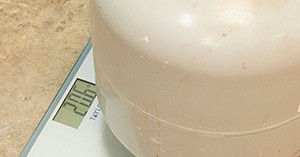
Gross weight is the tare weight plus the propane currently inside. A scale reading becomes useful when you subtract that cylinder’s stamped tare weight.
A simple weight example
Suppose a cylinder collar is stamped TW 17.2 lb and the complete cylinder weighs 31.7 lb on an accurate scale. The estimated propane weight is 31.7 − 17.2 = 14.5 lb. Scale uncertainty, attachments, dirt, and unreadable stamps can affect the estimate, so use it for planning rather than modifying or filling a cylinder yourself.
To check how much remains before leaving for exchange, see the complete propane tank level guide. Weight is more dependable than shaking the cylinder or relying on flame appearance.
Expansion room is intentional
Why a propane cylinder should not be completely full of liquid
Propane is stored as a liquid under pressure with vapor space above it. The liquid expands as temperature rises, so cylinders must not be filled solid with liquid. Filling equipment, trained personnel, cylinder markings, and overfill-protection features work together to maintain appropriate expansion space.
Do not try to “top off” or transfer propane yourself
Never defeat an OPD, vent propane intentionally, heat or chill a cylinder to force more product in, or transfer propane between consumer cylinders. Only qualified personnel using approved equipment should fill a cylinder. A larger fill is not a better value if the cylinder, process, or final condition is unsafe.
The normal expansion-space concept is different from an exchange marketer choosing a lower labeled net weight. Safety determines the maximum permitted fill; the seller’s net-weight label tells you how much product is being offered within that limit.
Convenience model
How propane tank exchange works
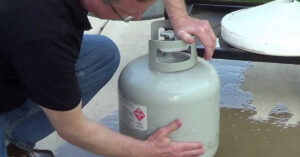
- Bring an accepted cylinder. Requirements vary by exchange network and retailer. Do not bring a leaking cylinder into a store or occupied area.
- Read the offer before paying. Check the labeled net weight, total price, taxes/fees if applicable, hours, and retailer instructions.
- Surrender the old cylinder. Any propane remaining generally stays with it, so exchange is most economical when the cylinder is close to empty unless condition or urgency outweighs that value.
- Receive a filled network cylinder. Inspect it before loading: valve cap/seal as applicable, readable labels, sound collar/foot ring, no severe corrosion, bulging, fire damage, or obvious leakage.
- Transport it upright and secured. Go directly to the destination; do not leave it in a passenger vehicle.
When exchange earns its premium
Exchange can be a strong choice when the nearest refill station is closed, a cook is about to begin, or an accepted cylinder has deteriorated cosmetically or is no longer eligible for refill. The transaction includes logistics, cylinder processing, inspection, refurbishment/requalification as required, filling, distribution, cage management, and retailer convenience—not only propane.
What to inspect at the cage
- Net propane weight stated clearly
- Valve area clean and protected as intended
- No strong propane odor or audible leak
- No deep rust, fire damage, dents, bulging, or damaged foot ring/collar
- Labels and safety instructions readable
- Cylinder sits upright without rocking dangerously
Keep your cylinder
How propane refill works
At a refill station, trained personnel inspect the customer cylinder before filling. They may reject it for condition, valve type, unreadable markings, eligibility/date issues, or other safety reasons. If accepted, the attendant connects approved filling equipment and controls the fill using the required method.
- Confirm the station is operating. Filling hours may differ from store hours, and a trained attendant must be available.
- Ask how pricing works. Some locations charge for measured product; others use a flat rate or minimum. Understand the basis before comparing it with exchange.
- Let the attendant inspect the cylinder. Do not paint over, grind, restamp, or otherwise alter markings to make a cylinder appear eligible.
- Keep ignition sources away. Follow the station’s unloading and waiting instructions.
- Review the completed fill. Check the receipt or measured quantity when provided, inspect the valve area, secure the cylinder upright, and transport it promptly.
Refill is especially useful when you own a good cylinder, know its history, and still have propane remaining. Because the cylinder comes back to you, protective care—keeping it dry, upright, unmodified, and away from corrosive storage—has long-term value.
Compare apples to apples
How to compare exchange and refill cost
Do not compare only the big price on the sign. Record the actual product quantity and total checkout price. Then include unavoidable travel, waiting time, and the condition value of exchanging your cylinder.
| Worksheet line | Exchange | Refill |
|---|---|---|
| Total paid | Posted exchange price + taxes/fees | Propane charge + minimum/service charge + taxes/fees |
| Propane received | Labeled net weight | Measured amount added, converted to a common unit if needed |
| Fuel surrendered | Estimate remaining propane in old cylinder | Usually none; remaining propane stays in cylinder |
| Effective propane gained | Received amount minus usable propane surrendered | Measured amount added |
| Convenience cost/value | Distance, hours, transaction time, replacement cylinder condition | Distance, wait, attendant hours, keeping preferred cylinder |
| Comparable result | Total paid ÷ effective pounds gained | Total paid ÷ pounds added |
Illustrative comparison—not a local price quote
If an exchange provides 15 lb and costs $24, its simple price is $1.60 per pound before considering surrendered fuel. If a refill adds 18 lb and costs $25.20, its simple price is $1.40 per pound. But if the refill requires a long separate trip while an exchange is next door, the practical choice can still change. Use current posted quantities and prices; do not treat these sample numbers as today’s local rates.
If you surrender 3 lb in the exchange cylinder, you gained only 12 lb of new usable propane in that transaction. That is why checking the level before exchanging is useful. Cylinder-condition value can work the other way: swapping an accepted, aging-looking cylinder for a serviceable network cylinder may be worth more than the remaining fuel.
When one seller quotes gallons and another quotes pounds
Propane may be sold or metered by volume while exchange labels commonly use net weight. Liquid propane weighs approximately 4.2 pounds per gallon, with the exact relationship varying somewhat with temperature and reference conditions. For a shopping comparison, convert both offers to the same unit and keep the result appropriately rounded. The receipt, dispenser measurement, and labeled net weight are more authoritative than a visual guess about how “full” a cylinder feels.
Five questions to ask before choosing
- What is the labeled or measured amount of propane I will receive?
- What is the complete price, including minimum fills, service charges, tax, or a new-cylinder surcharge?
- If I refill, does my cylinder meet current eligibility and condition requirements?
- If I exchange, how much usable propane am I surrendering and what cylinder condition will I receive?
- Are the service hours, travel time, and wait practical for today’s cook?
Keep the comparison simple enough to use. If two offers are close, convenience and cylinder condition may decide the transaction. If one offer provides materially less propane, calculate the unit cost before assuming that the lower register price is the better value.
Eligibility matters
Cylinder condition, manufacturing marks, and requalification
Portable propane cylinders carry permanent collar markings that identify specifications and manufacturing information. Continued filling eligibility depends on the cylinder type, date/qualification markings, condition, current requirements, and the station’s inspection. Do not rely on a generic online date rule without reading the actual markings and current official guidance.
Reasons a refill station may reject a cylinder
- Severe rust, pitting, dents, bulging, fire exposure, or other physical damage
- Damaged foot ring or collar that prevents stable handling or valve protection
- Valve, threads, relief device, or connector damage
- Missing, altered, unreadable, or ineligible specification/date markings
- Improper paint, repairs, attachments, or evidence of modification
- Wrong cylinder/application type or a cylinder the station is not equipped to fill
Exchange networks can remove surrendered cylinders from service for inspection, refurbishment, requalification, or disposal within their process. That makes exchange convenient when a cylinder is accepted at the cage but might not be refillable as presented. Acceptance is not guaranteed; follow the network rules.
Never hide damage
Do not grind rust, fill pits, weld a consumer cylinder, repaint over warning evidence, alter collar stamps, or force a valve so a cylinder will be accepted. Set a questionable cylinder aside outdoors in a safe location and contact a propane professional for instructions.
The connection system
OPD valves, connectors, seals, and grill regulators
Many modern grill cylinders use an Overfilling Prevention Device (OPD) valve with a recognizable handwheel. The OPD is part of the filling safety system; it is not a substitute for trained filling, inspection, weight/volume controls, or safe consumer handling.
The grill’s Type 1/ACME connector and regulator must seat correctly on the cylinder valve. Cross-threading, a damaged connector, debris, a worn seal, or a cracked hose can create a leak or prevent normal fuel flow. Hand-tighten as directed by the grill manufacturer. Do not improvise adapters or apply sealant where it is not approved.
Why a new tank can produce low flame
If burner knobs are open when the cylinder valve is opened—or the valve is opened rapidly—the regulator’s protective excess-flow feature may restrict gas. Turn everything off and follow the manufacturer’s reset and lighting sequence. Open the cylinder slowly. If normal flow does not return or the condition repeats, inspect the connection and arrange diagnosis; do not keep resetting an unsafe or damaged system.
For a complete symptom path, see Gas Grill Won’t Light?
From seller to grill
Transport and store propane cylinders safely
Transport upright
Keep the valve at the top and secure the cylinder against rolling, tipping, or impact. Use a stable crate or restraint in a ventilated cargo area as appropriate.
Limit vehicle time
Go directly to the destination. Do not leave a cylinder in a hot car, trunk, or enclosed passenger area. Unload it promptly.
Store outdoors
Keep cylinders upright in a well-ventilated outdoor location away from ignition sources, heat, doors/windows as required, and places where vapor could collect.
Protect without enclosing
Keep valves protected and cylinders dry, but do not seal them inside an unventilated box. Prevent standing water and corrosive chemical exposure.
If you smell gas
Do not start the vehicle, operate switches, smoke, or search for a leak with a flame. Move away from the area, keep others clear, and contact emergency services or the propane supplier as conditions require. Do not transport a known leaking cylinder in a vehicle.
Local fire codes, property rules, ferries, tunnels, shared buildings, and commercial vehicles may have additional restrictions. Follow current local requirements and official cylinder labeling.
Put the cylinder into service
Connect an exchange or refill cylinder to the grill correctly
- Place the grill outdoors where the manufacturer permits, with the lid open and every burner control OFF.
- Inspect the valve and grill connector. Do not connect damaged, dirty, incompatible, or leaking components.
- Set the cylinder upright in its designed holder so the hose is not stretched, kinked, or touching hot metal.
- Attach the connector squarely according to the manual. Do not force cross-threaded parts.
- Perform the manufacturer’s approved leak check whenever required, including after reconnecting a cylinder. Never use an open flame.
- Open the cylinder valve slowly with burner controls still off, then follow the grill’s lighting sequence.
- Observe ignition and flame. Shut down immediately for persistent odor, bubbles, hissing, flashback, flame under the panel, or abnormal regulator behavior.
Close the cylinder valve after cooking as directed, then turn the burner controls off. Keeping the connection area clean and the hose protected helps the next cylinder change go smoothly.
Decision guide
When exchange, refill, or delivery makes the most sense
Choose exchange when…
- You need propane quickly
- Refill service is closed or distant
- An accepted cylinder’s condition or eligibility is a concern
- You value predictable retail convenience
Choose refill when…
- You want to keep a good cylinder
- It still contains usable propane
- You want a measured fill within safe limits
- The refill trip and hours fit your schedule
Choose delivery when…
- You want to avoid last-minute trips
- You use a planned backup-cylinder rotation
- Local delivery is available for your cylinder/service type
- Convenience outweighs self-transport
Grill Tanks Plus offers a propane exchange selector and propane tank delivery program for eligible local customers. Review current service details and pricing rather than assuming a past offer remains unchanged.
Need propane without the last-minute run?
Choose the local propane option that fits your timing, location, cylinder needs, and grill use.
Plan before the flame goes out
Backup-cylinder rotation and Florida storm preparation
A two-cylinder rotation can prevent interruption without encouraging excessive storage. Use one cylinder on the grill and keep one serviceable backup stored outdoors in a permitted, well-ventilated location. When the active cylinder empties, connect the backup safely and refill or exchange the empty promptly. Mark cylinders only in a way that does not cover required labels or metal stamps.
Before a large cook
- Estimate the active tank level by weight
- Confirm the backup is not actually empty
- Inspect both valves, collars, foot rings, and storage location
- Know refill hours and nearby exchange availability
- Test grill ignition early enough to arrange repair
Before severe weather
Do not bring propane cylinders indoors, into a garage, or into an enclosed porch for convenience. Secure them upright outdoors according to official and local guidance, away from flood movement, ignition sources, and places where escaping vapor could enter a building. Do not use an outdoor grill indoors during a power outage; carbon monoxide and fire risks remain even when doors or windows are open.
Common questions
Propane tank exchange vs. refill FAQ
Is propane exchange a scam?
No. Exchange is a convenience and cylinder-management service with a stated product quantity. The smart consumer step is to read the net weight and total price, then compare them with refill while considering fuel surrendered, cylinder condition, and time.
Does a 20 lb tank always contain 20 lb of propane?
No. “20 lb” commonly describes the nominal cylinder class/capacity. An exchange product may state a different net propane weight. A refill also depends on cylinder eligibility, safe filling limits, and the station’s measured process.
Is it cheaper to refill or exchange a propane tank?
Refill often has a lower propane-unit cost and preserves remaining fuel, but not always. Compare the current total price and actual amount received, then add travel, waiting time, and any value from replacing the cylinder.
Can I exchange a tank that is not empty?
Often yes if the network accepts the cylinder, but the remaining propane generally leaves with it. Exchange early when urgency or cylinder condition matters; otherwise measuring the level can help preserve value.
Why would a refill station refuse my tank?
Common reasons include severe rust or damage, valve problems, unreadable or ineligible markings, a damaged collar/foot ring, fire exposure, modifications, or a cylinder type the station cannot service.
Can an exchange tank be refilled later?
Often a serviceable, eligible cylinder can be refilled, but the refill station must inspect it and current markings/condition govern. Branding or sleeves do not override cylinder safety requirements or provider policies.
Why does my grill have a weak flame with a new tank?
The cylinder may have limited fuel, the connector may not be seated, or the regulator may have entered an excess-flow condition. Turn controls off, inspect the connection, and follow the manufacturer’s slow-opening/reset sequence.
Can I leave a propane tank in my car while shopping?
No. Transport it upright and secured, go directly to your destination, and unload it promptly. Vehicles heat quickly and are enclosed spaces where leaked vapor can accumulate.
Where should a spare propane cylinder be stored?
Outdoors, upright, secured, and well ventilated, away from ignition sources and building openings as required. Do not store it in a house, garage, basement, or sealed cabinet.
How can I tell how much propane remains?
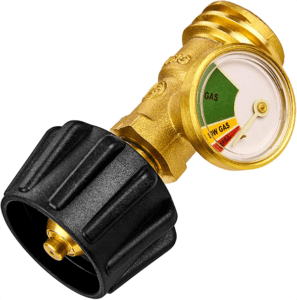
Weigh the cylinder and subtract its stamped tare weight for the best practical estimate. Warm-water methods and compatible gauges can provide a rough indication; pressure alone does not show remaining liquid reliably.
Use current official guidance
Propane cylinder safety resources
- U.S. DOT/PHMSA: propane gas cylinder safety
- National Fire Protection Association: grilling safety
- The cylinder label, refill/exchange provider instructions, and grill manufacturer’s manual